


COVID-19's Affect on Office Spaces
- Ethan Swanker
- May 10, 2022
- 2 min read
As the long-term effects of the COVID-19 Pandemic continue to transpire, we get to see how the real estate market was slowed down, and potentially altered permanently. These effects occurred worldwide, as our lifestyles were forced to change, so did the market. Beginning in March 2020, almost every office job was stuck doing their computer work from their homes, yet it wasn’t all so bad.
In fact, so many people preferred working from the comfort of their own homes that regardless of government social-distancing and mask mandates, they continued to work at home after they were allowed to return to their designated offices. In addition, a significant number of companies have reduced their work week from five 8-hour work days to four 10-hour days, following the trend of several European countries. In a study conducted by CNET, it was found that about a third of the participants were more productive and accomplished more in their year at home than the prior year in their company’s offices (CNET, 2021). Furthermore, when asked their opinion on working from home in the future, 27% hoped to continue working from home indefinitely while 61% preferred a hybrid system that divides their work time between home and office (CNET, 2021). These preferences and changes were acknowledged by employers, and therefore, corporate offices became less in demand.
Now that corporations may only need space for 60-75% of their employees, why would they buy or maintain a space much larger than needed? Short answer, they shouldn’t. This predicament for real estate investors varies significantly on the leaser, how they operate, and what the space is being used for. Due to a sudden surplus of unoccupied office space, real estate investors are able to buy office properties at a significant discount, even north of 20% of the total cost. While some investors are worried that the demand for office space will only decrease over time, others believe that there will always be a need for office spaces, so they might as well take advantage of the sharp discount!
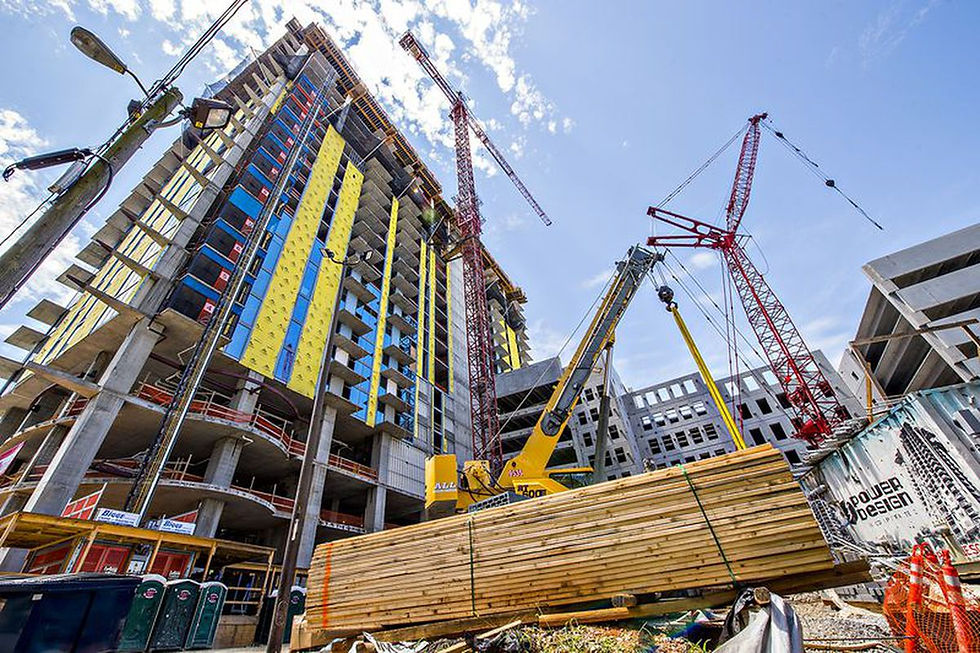
The development of new real estate has been squandered by the pandemic significantly. Between a record-breaking lack of labor, increasing production costs, widespread supply-chain issues, and a variety of other factors, it is harder than ever to complete a development project. According to the National Association of Realtors, in 2020, 26% construction was slowed due to these reasons. This drawback continued in 2021, where 17% of construction was affected in a similar manner. On the investor side, in 2020 alone, 22% of real estate purchases were affected by the unavailability of credit as a result of lenders pulling back on their investing. Even more noticeably, 36% of buyers experienced a change in income significant enough to negatively impact their ability to purchase real estate (NAR, 2022).
It is an interesting time for the real estate market, as we have seen rents and interest rates climb dramatically, yet it must be acknowledged that new opportunities are rising as well.


Comments